
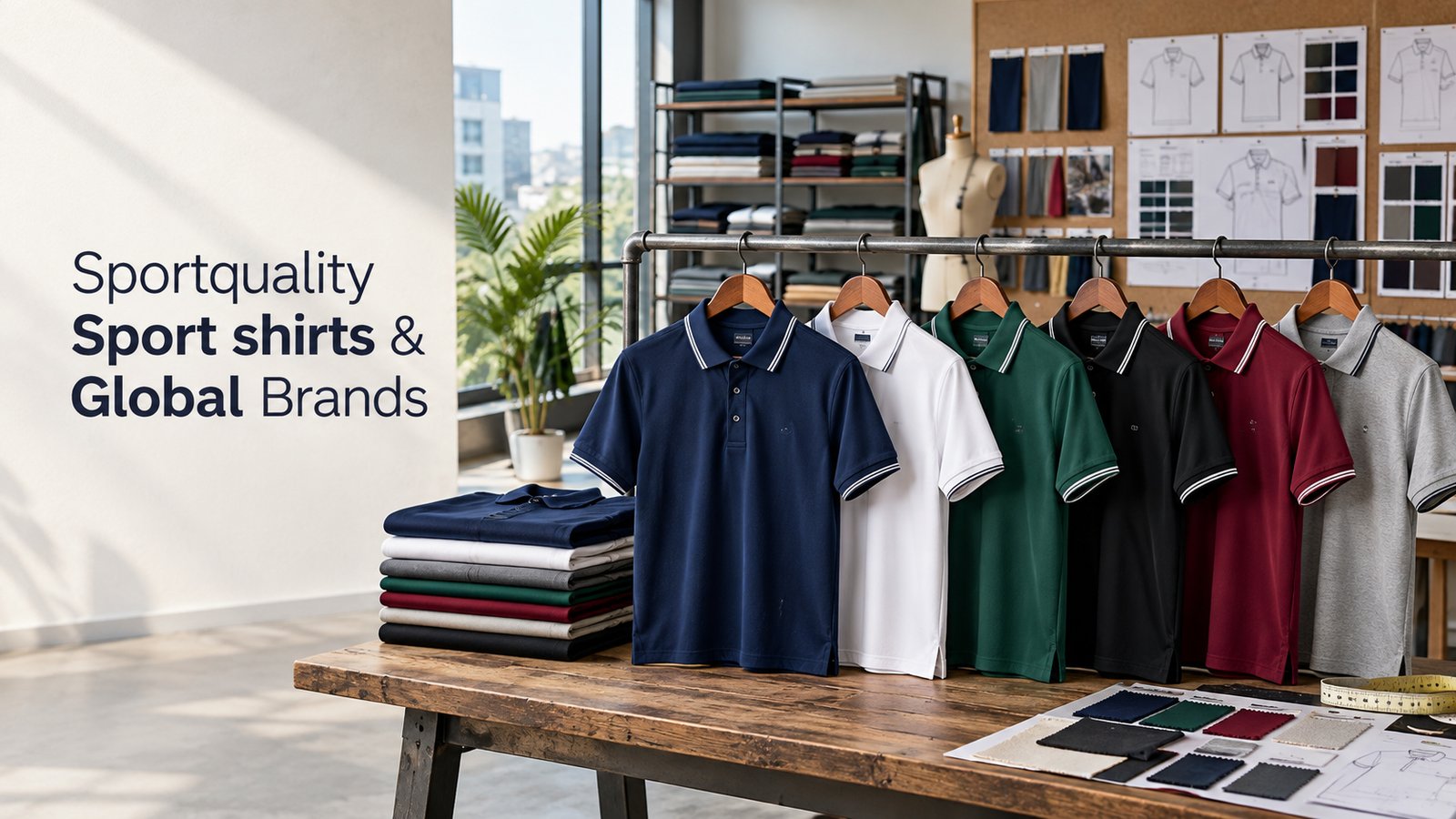
A Sports Polo Shirt may look like a simple apparel product, but developing the right style for an international market requires careful planning. Fabric composition, fit, collar construction, placket design, stitching, colors, trims, branding, performance requirements, finishing, and packing can all influence how the final garment looks and performs. A polo developed for golf may require lightweight fabric, breathability, stretch, and freedom of movement, while a corporate program may place greater emphasis on durability, embroidery, professional appearance, and consistency across repeat orders. Retail, teamwear, promotional, and activewear programs may have different priorities again.
Bangladesh provides international fashion and sportswear brands with an established apparel sourcing environment for developing polo shirts for different markets and applications. Simura Fashions supports global brands, importers, wholesalers, retailers, and other apparel buyers by coordinating their requirements with suitable production resources in Bangladesh. Depending on the product brief, the sourcing process can involve fabric selection, costing, sampling, fit development, color and trim approval, branding, production follow-up, quality requirements, packing, and export-related activities. A structured sourcing process helps buyers move from an initial product idea toward an approved garment that can support both current orders and longer-term apparel programs.
Why Bangladesh Is a Strong Sourcing Destination for Sports Polo Shirts

Bangladesh’s export-oriented apparel industry gives international buyers access to a broad sourcing and production ecosystem. A polo shirt order can involve fabric development, knitting, dyeing, cutting, sewing, embroidery, printing, finishing, inspection, packing, and preparation for export. This makes the country relevant not only for basic polo shirts but also for customized products developed around different customer groups, markets, seasons, and commercial positions.
However, sourcing from Bangladesh should not simply mean looking for the lowest quotation. The commercial value of an order depends on whether the required fabric, construction, workmanship, customization, quantity, quality level, and delivery schedule can be managed consistently. A promotional polo designed around cost efficiency will have different requirements from a premium golf polo or a fashion-oriented product with custom trims and seasonal colors.
A Sports Polo Shirt developed for activewear may prioritize lightweight construction, breathability, moisture management, and mobility. A corporate program may focus on consistent colors, embroidery, practical sizing, durability, and repeat-order reliability. A fashion retailer may place more emphasis on fit, fabric hand feel, color direction, and visual details. Understanding these differences before development begins helps buyers make more relevant sourcing decisions.
Understanding the Global Buyer and Target Market
Product development should begin with the end customer. Buyers need to determine whether the garment is intended for golfers, sports teams, corporate employees, retail consumers, hospitality staff, promotional programs, or another audience. Climate and season also matter because a product designed for a warm market may require a different fabric weight and construction from one intended for transitional or cooler conditions.
A useful product brief should identify the target market, intended application, approximate order quantity, fabric preference, GSM, fit, size range, colors, branding, packaging, delivery expectations, and any required testing or compliance standards. Not every technical detail needs to be finalized during the first discussion, but the commercial objective should be clear. Starting with a defined customer and market can reduce unnecessary sample revisions and help the sourcing process focus on the right fabric, fit, performance, styling, and price position from the beginning.
Fabric, Fit and Construction of a Sports Polo Shirt
Fabric has a major influence on the appearance, comfort, performance, durability, and cost of a Sports Polo Shirts. The appropriate choice depends on the intended use rather than one material being suitable for every application. Buyers should consider fiber composition, GSM, knit construction, yarn quality, surface texture, finishing, stretch, dimensional stability, and expected performance before approving a fabric.
Cotton can provide softness, breathability, and a natural hand feel, making it suitable for casual fashion, lifestyle collections, and corporate clothing. Polyester may be considered for golf, activewear, teamwear, and sports applications where lightweight construction, durability, easy care, or moisture management is important. Cotton-polyester blends can combine characteristics of both fibers, while elastane may provide additional stretch where greater mobility is required.
The following comparison provides a practical overview of common fabric directions for polo shirt development.
| Fabric Option | Key Characteristics |
Suitable Applications |
| Cotton Piqué | Soft, breathable and textured with a classic appearance | Casualwear, corporate wear, lifestyle collections |
| Polyester Piqué | Lightweight, durable and suitable for performance development | Sportswear, golf, teamwear, uniforms |
| Cotton-Polyester Blend | Balances comfort, durability and easier care | Corporate, promotional and everyday polo programs |
| Jersey Knit | Smooth surface with a softer, contemporary appearance | Fashion, casualwear and modern polo collections |
| Stretch Blend | Adds flexibility and freedom of movement | Golf, activewear and sports applications |
| Performance Knit | Can support quick-dry, breathability or moisture-management requirements | Sportswear, golf and outdoor apparel |
Collar and placket construction also influence the overall appearance. Polo Shirt with 3 button Placket requires attention to placket length, width, button spacing, reinforcement, stitching, and alignment. The opening should sit neatly without twisting or pulling the surrounding fabric.
Piqué, Jersey and Performance Fabric Options
Piqué remains closely associated with traditional polo shirts because its textured surface can create a structured appearance suitable for golf, corporate, casual, and retail programs. Jersey offers a smoother surface and can create a softer, more contemporary character. The choice should reflect the intended appearance, hand feel, weight, and market position.
Performance-oriented knits provide additional possibilities for sportswear. Depending on the buyer’s requirements, fabrics can be developed around breathability, stretch, quick drying, or moisture management. If a brand intends to make specific functional claims, those requirements should be clearly defined and supported by appropriate specifications and testing.
Fabric weight should also correspond with climate and application. A heavier fabric is not automatically better, and a long-sleeve garment does not necessarily require a heavy material. Shrinkage, colorfastness, pilling, dimensional stability, and other relevant characteristics can also be considered according to the buyer’s specification.
Product Development, Customization and Sampling

Product development converts a buyer’s idea into an approved garment that can move toward commercial production. Some buyers may provide a detailed tech pack, while others may begin with a reference garment, sketch, photograph, or initial concept. In either case, development should establish the fabric, measurements, construction, colors, trims, branding, and finishing requirements before bulk production begins.
Customization allows brands to create a recognizable product rather than relying on a generic polo. Buyers can consider body colors, collar treatments, tipping, piping, contrast panels, buttons, embroidery, printing, labels, hangtags, and packaging. These details should support the intended customer and brand identity rather than being added without a clear purpose.
Embroidery is particularly relevant for golf, corporate, club, and teamwear programs. Logo dimensions, placement, thread colors, and artwork should be established during development. Printing can offer different possibilities for fashion and sportswear products, but artwork size, positioning, and colors should also be documented clearly.
Sampling brings these decisions together. A physical sample allows the buyer to evaluate fabric, fit, collar proportion, placket construction, sleeves, trims, branding, and overall appearance before committing to commercial quantities. Corrections identified during sampling are generally easier to manage than changes requested after bulk production has begun.
Developing Full-Sleeve and Customized Polo Styles
A Full Sleeve Sports Polo Shirt can extend an existing polo collection into transitional or cooler seasons while maintaining the core character of the product. It can also be developed for corporate clothing, travel, outdoor use, golf, or markets where customers prefer additional arm coverage.
Developing a long-sleeve style requires more than simply extending the sleeve length. Shoulder width, armhole shape, bicep measurement, sleeve length, cuff opening, cuff construction, and fabric recovery can all affect comfort and appearance. Rib cuffs may create a sportier look, while self-fabric cuffs can provide a cleaner casual finish.
Full Sleeve Sports Polo Shirt with 3-button Placket can combine additional coverage with traditional polo styling. In this type of development, the collar, placket, body fit, sleeves, and cuffs should be reviewed as one complete garment because changes to one element can influence the overall proportions.
Sample comments should be documented clearly. Updated measurement charts, approved artwork, color references, trims, and construction details create a reliable development record. Once the final sample reaches the required standard, it can become an important reference for bulk production and inspection.
Quality Control, Bulk Orders and Commercial Planning

Quality control should begin before final inspection.The team can check the fabric before cutting, communicate approved measurements and workmanship standards before sewing, and monitor critical construction points during production. By identifying issues early, the relevant teams can make corrections before they complete a large quantity of garments.
For polo shirts, quality teams may check fabric appearance, measurements, seams, stitching, collar shape, placket alignment, button spacing, sleeve construction, embroidery or print positioning, shade consistency, labels, finishing, cleanliness, pressing, and packing. Depending on the buyer’s specifications, quality teams may also test fabric performance for shrinkage, colorfastness, pilling, dimensional stability, and other required characteristics.
Color management plays a particularly important role in sports teams, corporate programs, uniforms, and repeat orders. Buyers and production teams can use lab dips to establish the target color before bulk dyeing and monitor production to control unwanted shade variations. They can also use approved samples and documented specifications as important references when placing repeat orders for a successful product.
MOQ, Pricing, Packing and Repeat Orders
Commercial planning should begin early. Fabric development, dyeing, individual colors, printing, embroidery, custom trims, and other components can determine minimum order quantities. Buyers should therefore communicate realistic quantity expectations before they advance too far in the development process.
Fabric composition, GSM, construction, quantity, colors, branding, trims, testing, packaging, and delivery requirements can also influence FOB pricing. Buyers should not always choose the lowest quotation as the best commercial option. Incorrect measurements can lead to returns, inconsistent shades can cause rejection, and delivery delays can affect the intended sales period. Buyers should therefore evaluate price alongside quality consistency, communication, production reliability, and delivery requirements.
Packing also forms an important part of the product specification. Retail and e-commerce programs may require hangtags, barcodes, size stickers, individual polybags, or specific folding methods. Corporate programs may require buyers to organize garments by size, department, or destination. For repeat orders, buyers can improve efficiency and maintain product consistency by keeping accurate records of approved fabrics, measurements, colors, trims, branding, labels, and packaging.
Sports Polo Shirts Sourcing with Simura Fashions

International apparel sourcing can involve several parties before a finished garment is ready for shipment. Fabric suppliers, dyeing facilities, garment production units, embroidery and printing facilities, trim suppliers, testing services, quality teams, and logistics providers may all contribute to one apparel program. Coordinating these activities can be challenging for buyers that do not maintain their own sourcing operation in Bangladesh.
Simura Fashions works with international fashion brands, sportswear brands, importers, wholesalers, retailers, and other apparel buyers seeking sourcing support in Bangladesh. Its role is that of a sourcing partner rather than the factory producing every garment. Simura Fashions can connect buyer requirements with suitable production resources based on product specifications, order quantities, quality expectations, and commercial objectives.
A buyer may approach Simura Fashions with a complete tech pack or an initial concept requiring further development. Depending on the program, sourcing support can include fabric selection, costing, sample development, fit corrections, color and trim coordination, branding, production follow-up, quality requirements, packing instructions, and export-related activities.
A core polo program can also evolve over time. A buyer may begin with a short-sleeve style and later introduce seasonal colors, different fabrics, alternative plackets, long-sleeve versions, or products for additional markets. Established specifications can provide a useful foundation for these developments rather than requiring every new style to start from zero.
How an RMG Buying House Supports International Buyers
An RMG buying house can act as a coordination point between an international buyer and the different resources involved in sourcing and production. This can be particularly useful for buyers that do not maintain a permanent sourcing office in Bangladesh.
During product development, changes to fabric, measurements, colors, trims, artwork, or construction need to reach the relevant parties accurately. Once an order moves into production, approved specifications should remain the reference for production follow-up and quality requirements. Packing and shipment instructions should also remain connected with the buyer’s original requirements.
For Simura Fashions, the sourcing-partner approach means helping international buyers coordinate these stages while keeping their product specifications and commercial objectives at the center of the process. Clear documentation and regular communication can also prevent teams from using outdated specifications or overlooking important development comments.
Building a Long-Term Sports Polo Shirt Sourcing Strategy
Buyers should evaluate the success of a sourcing program beyond a single completed shipment. Once a brand establishes an approved fit, fabric specification, construction standard, color process, branding method, and packing format, those references can provide a foundation for future orders.
Core Sports Polo Shirts can gradually develop into a wider product family. Brands may introduce new colors for another season, adjust fabric weight for a different climate, develop a long-sleeve version, change selected placket details, or create products for golf, corporate, teamwear, and retail customers. Building on an established specification can make development more efficient than starting every product independently.
Repeat orders make consistency increasingly important. Customers who reorder an established product expect the new garment to resemble what they previously purchased. Unexpected changes in fit, fabric feel, color, collar construction, branding, or packaging can affect the customer experience. Maintaining approved product records can therefore support both quality and commercial continuity.
From the First Order to Repeat Apparel Programs
The first commercial order can establish useful references for both the buyer and sourcing team. After successfully developing the fabric, fit, colors, construction, branding, quality requirements, and packaging, buyers can use these approved decisions for future orders.
A brand may begin with one polo for a specific market and later create coordinated styles for different seasons or customer groups. Buyers can adjust selected details while keeping the successful elements of the original product consistent. This approach can support a more coherent collection and reduce unnecessary redevelopment.
For global buyers sourcing from Bangladesh, stronger long-term results come from combining clear product requirements with disciplined development, quality follow-up, realistic commercial planning, and consistent communication. Price remains important, but buyers should evaluate it alongside product quality, supplier reliability, and the requirements of their target market
Simura Fashions supports this process by coordinating apparel sourcing and product development activities in Bangladesh. With a structured approach, international buyers can move beyond individual orders and develop scalable polo programs for different markets, seasons, and applications while maintaining clearer standards across future collections and repeat business.
Frequently Asked Questions
1. Why should global brands source Sports Polo Shirts from Bangladesh?
Bangladesh offers an established export-oriented apparel sourcing ecosystem with knitwear capabilities suitable for different polo programs. Buyers can develop products around different fabrics, fits, colors, constructions, quantities, and commercial requirements while coordinating development, quality, packing, and production requirements.
2. What fabrics are suitable for a Sports Polo Shirt ?
The target market and intended use determine the appropriate fabric. Buyers can choose from cotton, polyester, cotton-polyester blends, piqué, jersey, stretch blends, and performance-oriented knits. Golf and activewear programs may prioritize lightweight construction and mobility, while corporate and casual collections may prioritize comfort, appearance, durability, and easy care.
3. Can global buyers customize Sports Polo Shirts in Bangladesh?
Yes. Buyers can specify fabric composition, GSM, fit, colors, collar construction, placket design, buttons, embroidery, printing, labels, hangtags, trims, and packaging. The final customization should reflect the intended customer, brand identity, price position, and product application.
4. Can buyers source Full Sleeve Sports Polo Shirts for different seasons?
Yes. A Full Sleeve Sports Polo Shirt can be developed for transitional weather, cooler markets, golf, corporate clothing, travel, outdoor applications, and other uses. Buyers can select the fabric weight, sleeve construction, cuffs, fit, colors, and branding according to their market requirements.
5. How does Simura Fashions support international Sports Polo Shirt buyers?
Simura Fashions works as an apparel sourcing partner for international buyers sourcing from Bangladesh. Depending on the program, support can include fabric sourcing, costing, sampling, product revisions, production coordination, quality follow-up, packing requirements, and export-related activities, connecting the buyer’s approved requirements with suitable production resources.
Call to Us: We’re here whenever you need us +88 01872657718, +88 01630-438587
Write to Us: simurafashions@simuragroup.com
Our Location: 109 Masjid Road, Old DOHS, Banani, Dhaka, Bangladesh.